

 Deutsch
 Français
 Español
 Italiano
 Português
 Polski
 українська
 Русский
 Türkçe
 Nederlands
 Svenska
 Čeština
 Suomi
Suomi Dansk
Dansk Norsk
Norsk Română
 Magyar
 Български
 Ελληνικά
 Slovenčina
 Kiswahili
 Bahasa Indonesia
 हिन्दी
 한국어
한국어 中文
中文 日本語
日本語Solar cells
Energy from orbit: solar cells power your planet – the hotter the planet, the more each cell delivers.
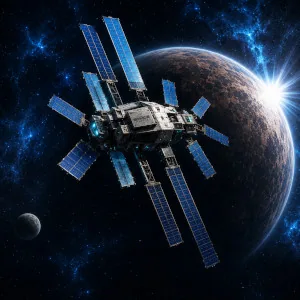
Solar cells are satellites that cannot fly. They stay in your planet's orbit and deliver energy for mines and other buildings there. They do not take up any building fields.
How much energy a cell delivers depends on the planet's temperature: on icy worlds it is little, on hot planets many times more. The table below shows the values per temperature.
Strengths and weaknesses
- + Available from weapons factory level 1 and quick to build.
- + No building fields and easy to expand – if you run short of energy, just build more.
- – Solar cells count as ships: when you are attacked, they are part of the battle and can be destroyed. Since they cannot fly, you cannot save them with an escape flight either.
| Planet temperature | Energy per solar cell |
|---|---|
| -160 °C | +10 |
| -120 °C | +10 |
| -80 °C | +10 |
| -40 °C | +20 |
| 0 °C | +30 |
| +40 °C | +40 |
| +80 °C | +50 |
| +120 °C | +60 |
| +160 °C | +70 |
| +200 °C | +80 |
Background
Using the solar radiation from a planet's orbit, solar cells transmit converted energy to the planet's surface to be captured by collectors on the planets surface and transferred to various supply stations. The solar cells are the first bold step towards nanotechnology. They are not only small, but also very efficient. Depending on the amount of solar radiation, a solar cell can generate anywhere from 10 to 60 units of energy.